A COMPLETE HISTORY
Origin of Morax: The Primordial Jester
Before time was measured and before laughter existed, there was Morax. An ancient demonic entity, Morax was a being of chaos and madness, existing in the void before creation. He was neither born nor created but emerged from the primordial chaos, a being of pure malevolence and mischief.
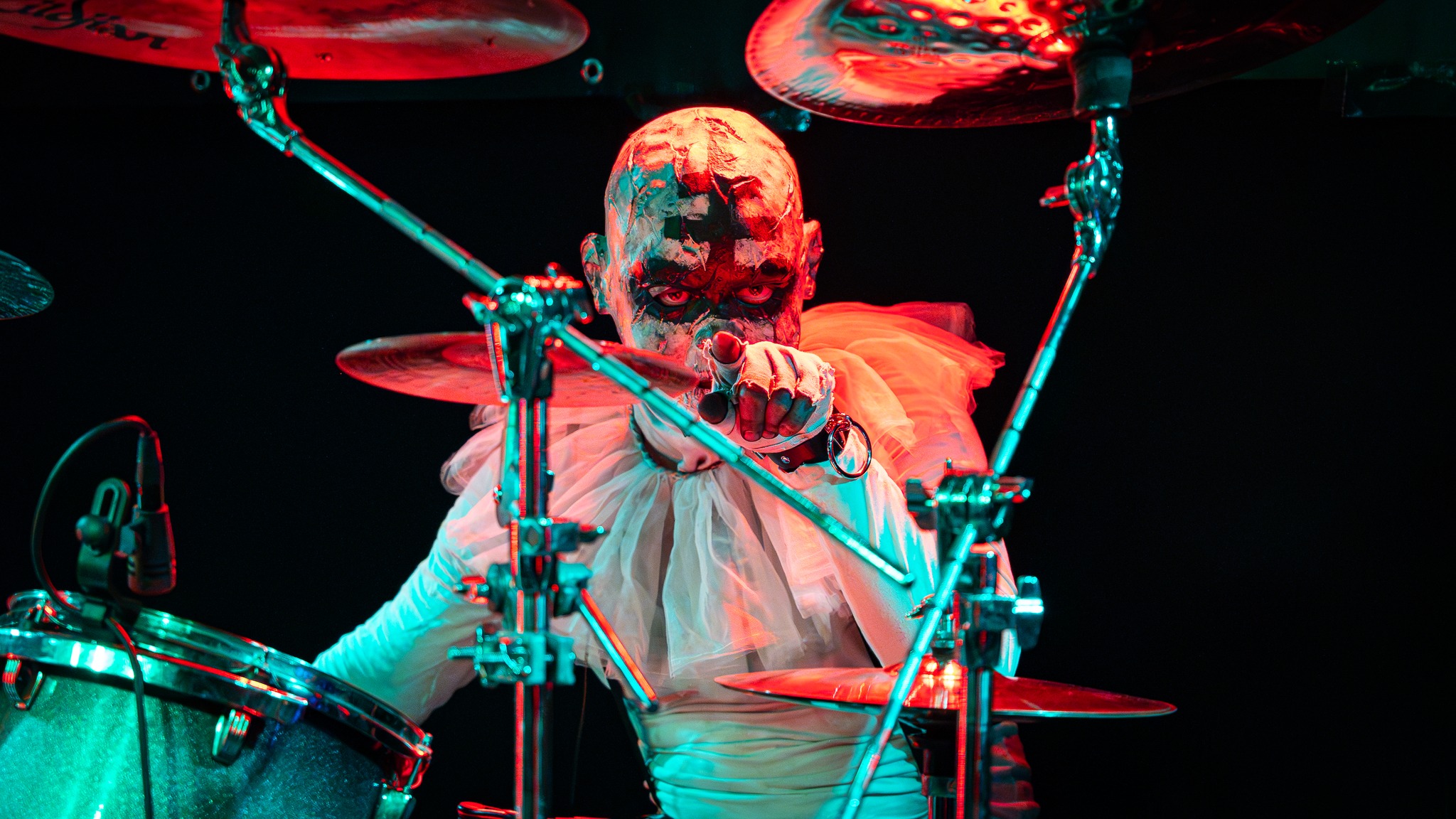
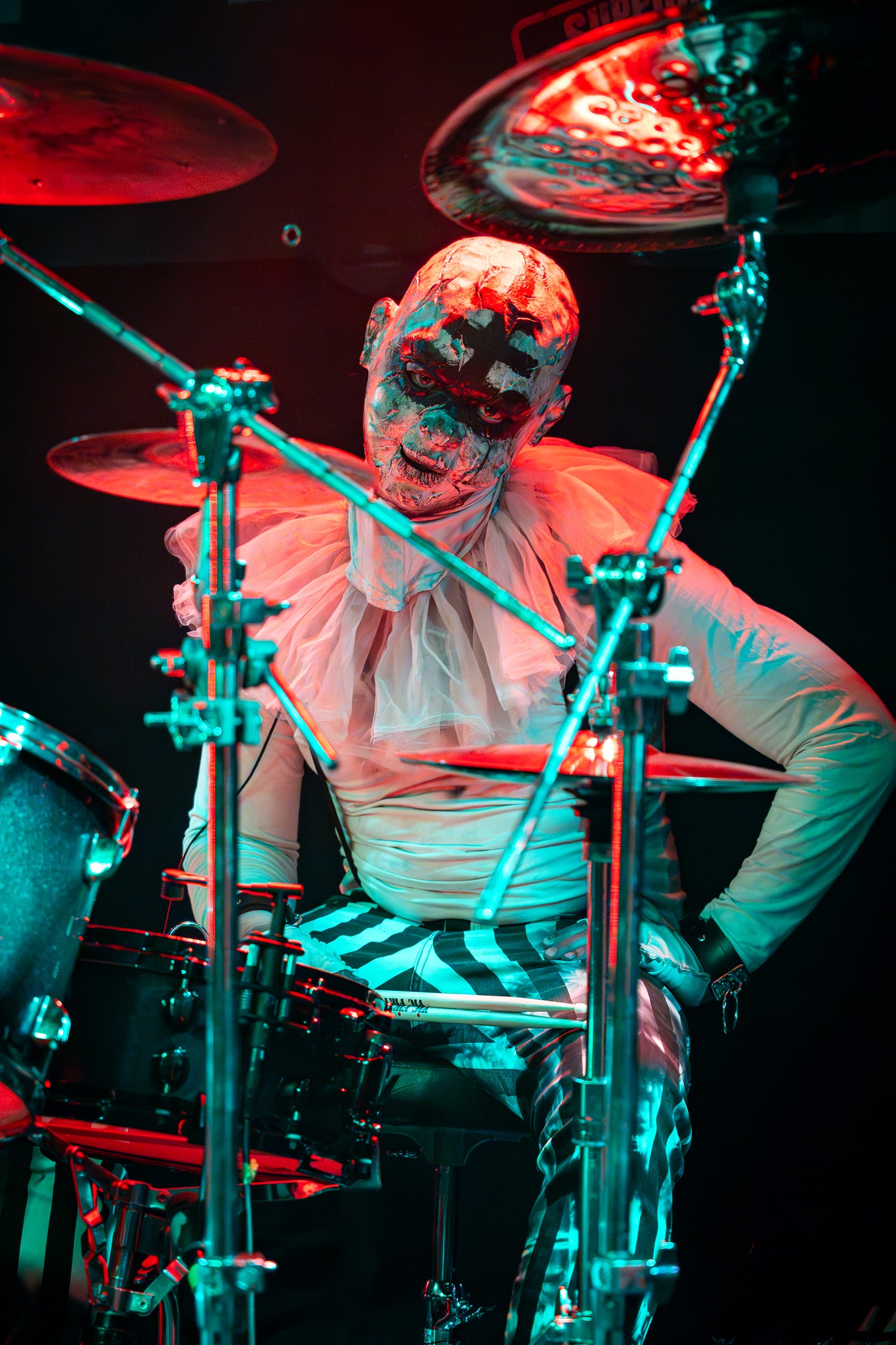
Morax’s appearance was both grotesque and captivating. He bore the head of a bull, with glowing eyes and a twisted grin that could unsettle even the bravest souls. His body was draped in tattered circus attire, and he carried a staff topped with a grotesque mask — a baby-faced clown visage with the Leviathan Cross painted across the eyes and forehead. This mask was not merely a disguise but a vessel of his essence, capable of possessing those who wore it.
As Morax wandered the void, he discovered that laughter was a powerful force. It could bend reality, warp minds, and even summon entities from beyond. He realized that by infecting others with his essence, he could create a troupe of performers who would spread his chaotic influence across the realms.
The First Ensemble: The Birth of The Injester
Morax’s first vessel was an unsuspecting clown, a performer who had stumbled upon the mask during his travels. Intrigued by its eerie allure, he donned the mask, unknowingly becoming the first host for Morax’s spirit.
As he performed, the audience felt a creeping unease. The laughter, once a source of joy, now carried an undercurrent of malice. The clown’s movements became erratic, his jokes twisted, and his presence unsettling. The curse had begun.
Over time, the mask passed from one performer to another, each becoming a new vessel for Morax’s essence. The troupe grew, and their performances became more theatrical, more ritualistic. Each show was a manifestation of Morax’s chaotic influence, each laugh a step closer to his ultimate goal: to spread madness and chaos across the realms.
The Curse: A Legacy of Madness
As the troupe performed across various realms, they left a trail of madness in their wake. Audiences would leave their shows in a trance-like state, their minds warped by the chaotic energy of Morax. Some would become obsessed with the troupe, following them from realm to realm, while others would descend into madness, unable to escape the influence of the clown spirit.
The Leviathan Cross, painted across the mask, became a symbol of the curse. It was said that those who gazed upon it would be marked, their souls forever linked to Morax’s chaotic essence. The symbol was both a warning and an invitation — a call to those who sought power through chaos and madness.
The Modern Era: The Injester’s Influence
In the modern era, the legend of The Injester has spread across realms. The troupe’s performances are more than just shows; they are rituals, each song a spell, each stage a portal. The audience, drawn into the spectacle, becomes complicit in the curse, their cheers fueling Morax’s power.
The Leviathan Cross remains a central motif, painted across the mask and incorporated into the band’s imagery. It serves as a reminder of the curse and a symbol of the band’s commitment to spreading chaos and madness.
Morax: The Drummer and Founding Member
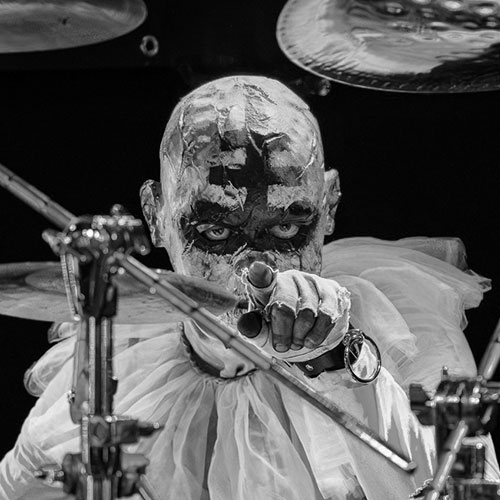
Morax, the demonic spirit of chaos, has always been drawn to rhythm and sound. In his earliest manifestations, he would create discordant beats that resonated with the very fabric of reality, causing ripples of madness and distortion. Recognizing the power of rhythm, he chose the role of the drummer, the heartbeat of any ensemble, to channel his chaotic influence.
As the founding member of The Injester, Morax transcended the boundaries of time and space. His essence, tied to the primordial forces of the universe, allowed him to exist simultaneously in multiple eras. Through his drumming, he summoned other lost souls, binding them to his cause and forming the first ensemble.
The 1918 Hammond Circus Train Wreck: A Convergence of Fates
On June 22, 1918, the Hagenbeck-Wallace Circus train, carrying over 400 performers and roustabouts, was involved in a catastrophic collision near Hammond, Indiana. The engineer of an approaching troop train fell asleep at the controls, leading to a rear-end collision that resulted in a massive fire. Eighty-six people perished in the blaze, and over 100 were injured. Wikipedia
Among the victims were renowned performers such as Jennie Ward Todd, an aerialist; Arthur and Joseph Dericks, strongman brothers; and Joseph Coyle, a chief clown, who tragically lost his wife and two children in the disaster. Smithsonian Magazine
In the aftermath, many of the deceased were buried in Woodlawn Cemetery in Forest Park, Illinois, in a section known as Showmen’s Rest. This area serves as a final resting place for circus performers, including many victims of the 1918 wreck.
Morax’s Role in the Aftermath
As the chaos unfolded in 1918, Morax, ever the opportunist, sensed the convergence of lost souls and the amplification of despair. He manifested in the shadows of the wreckage, his presence unnoticed amidst the confusion and grief.
Among the survivors, he found kindred spirits—those who had lost everything and were teetering on the edge of madness. He whispered to them in their dreams, offering solace in the form of eternal performance and the promise of never-ending applause.
One such individual was a grieving clown who had lost his family in the disaster. Morax approached him, offering a chance to continue performing, to never be forgotten. The clown, desperate and broken, accepted the offer, unknowingly binding himself to Morax’s essence.
Thus, the first ensemble was formed. A group of lost souls, each carrying their own tragedy, united under Morax’s influence. They became The Injester, a troupe that traveled the realms, spreading chaos and madness through their performance
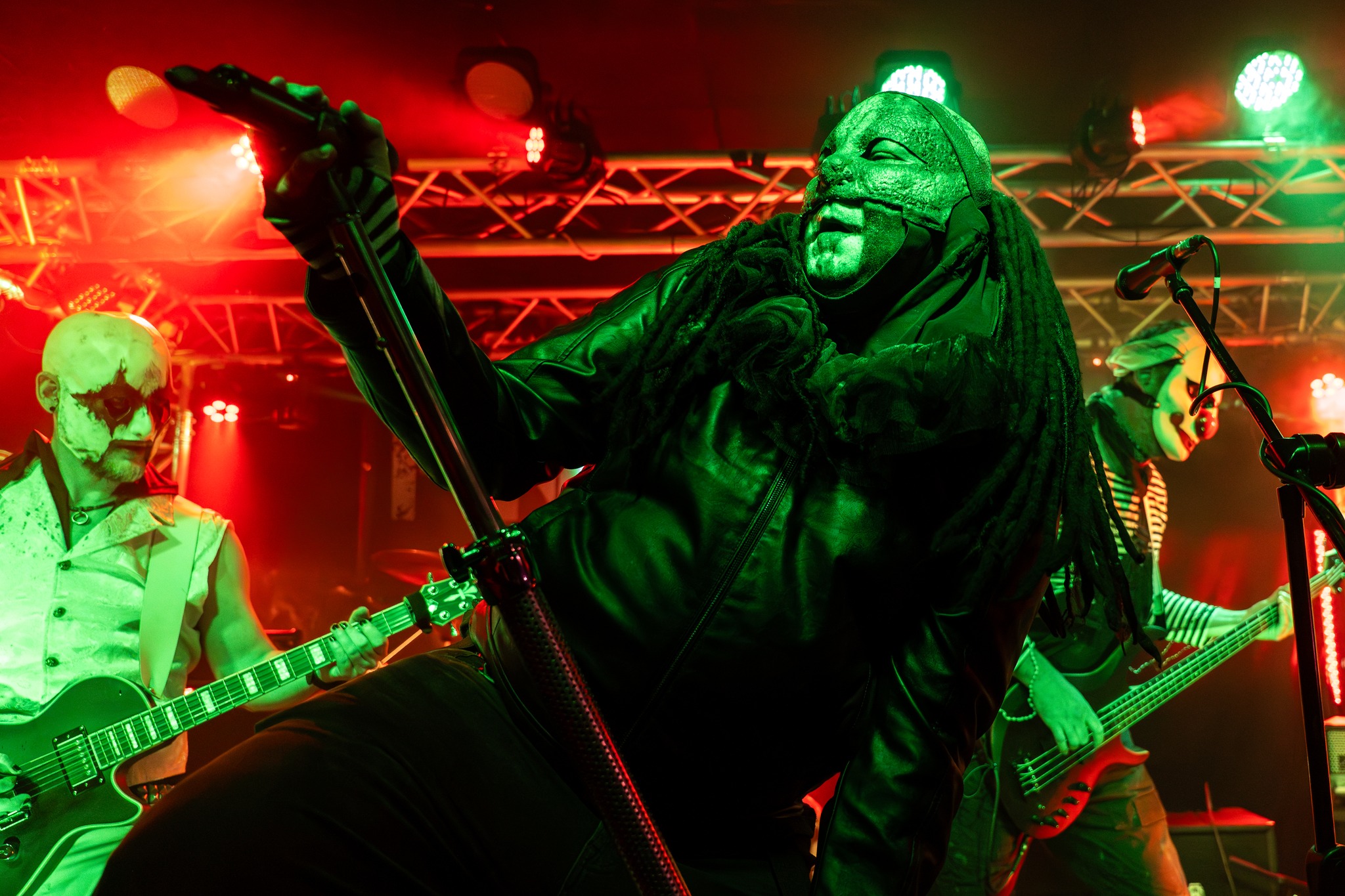
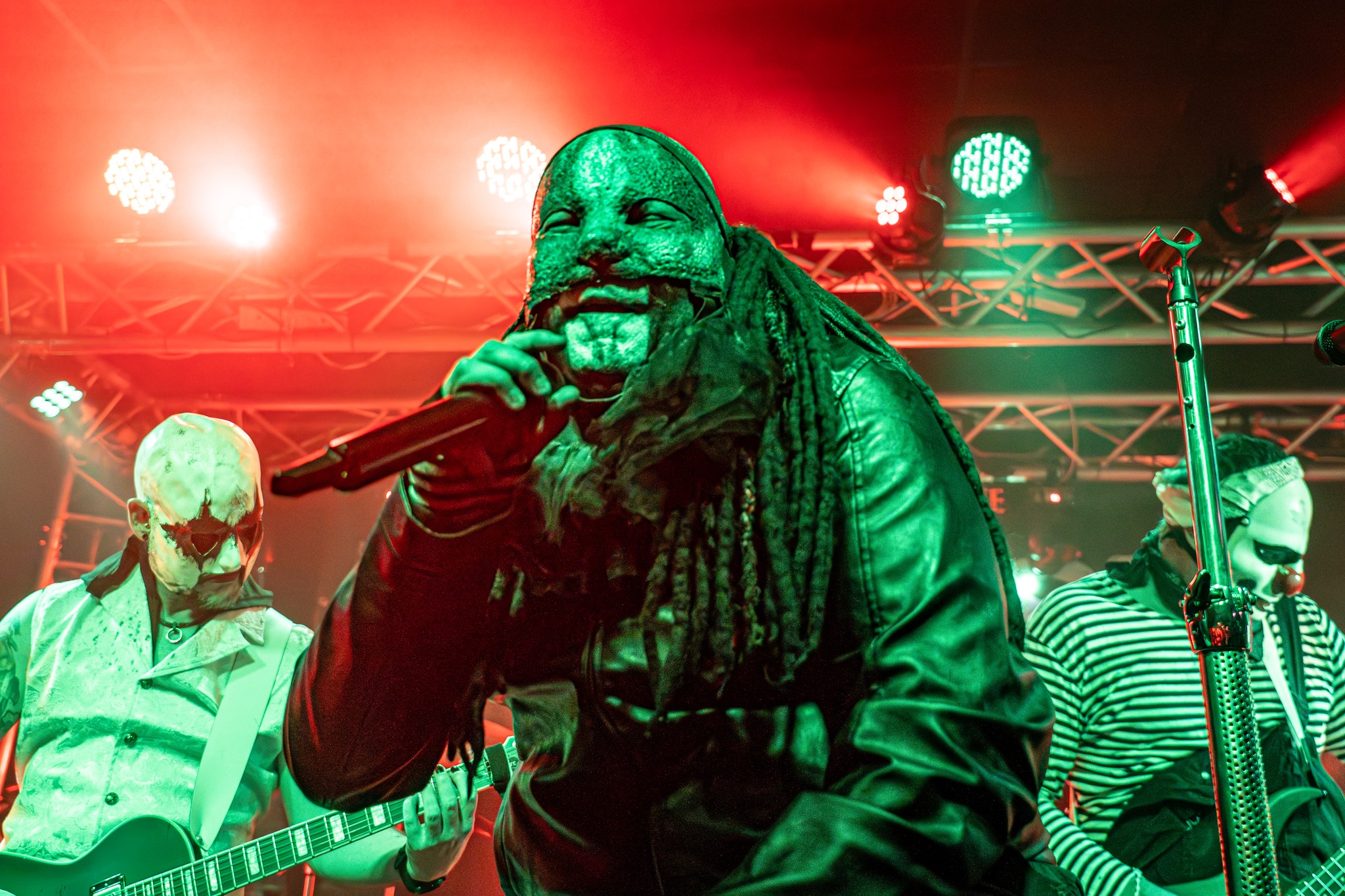
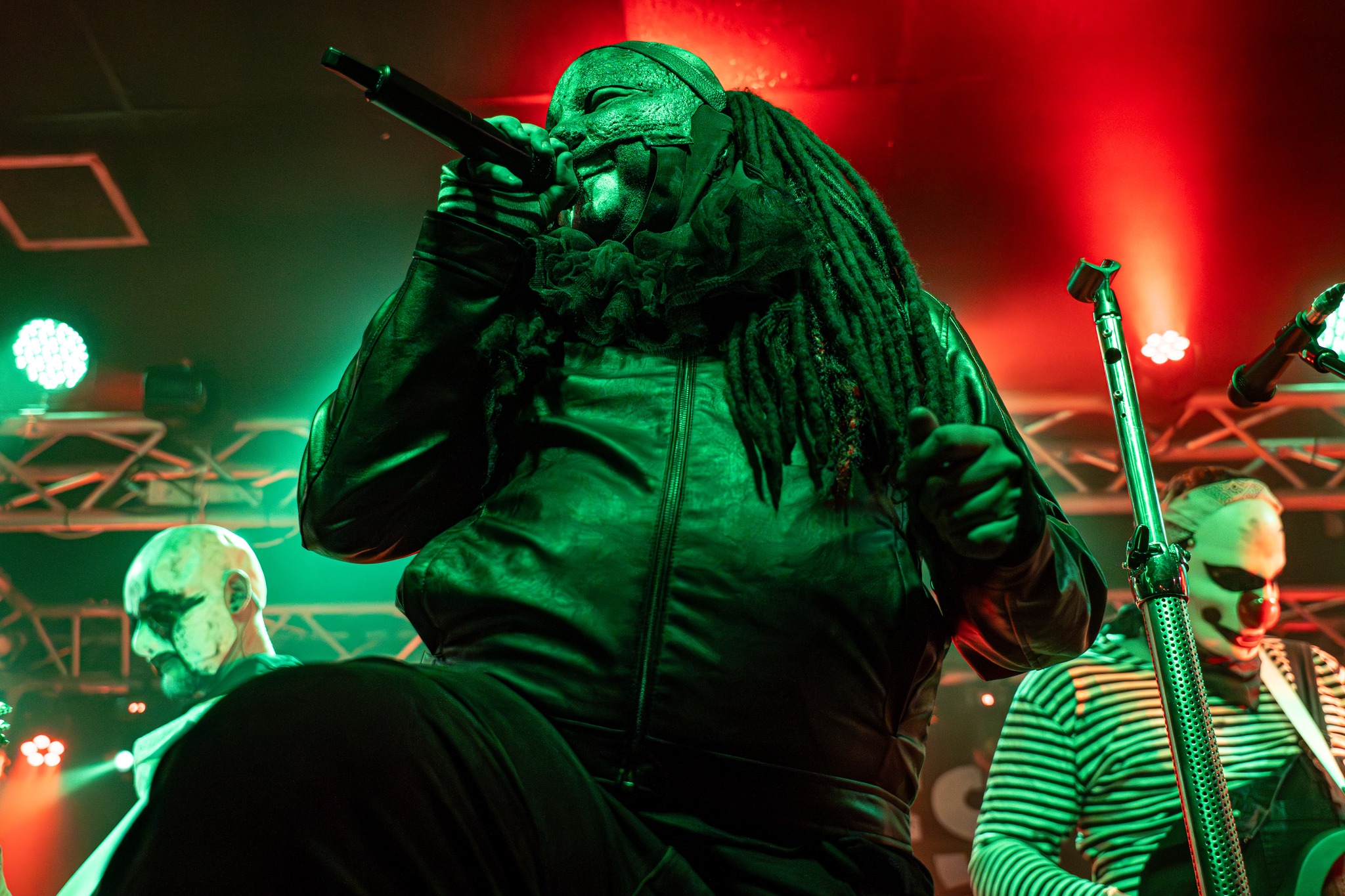
THE CLOWN HORDE
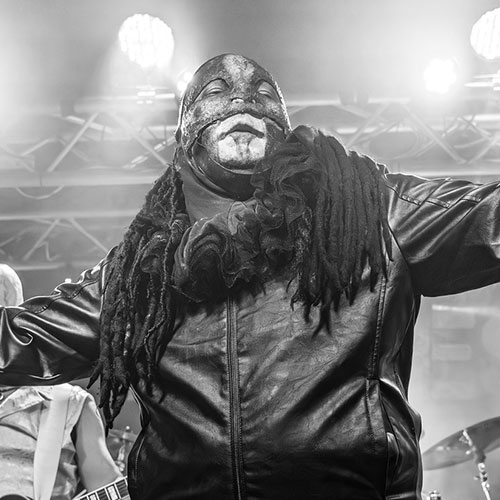
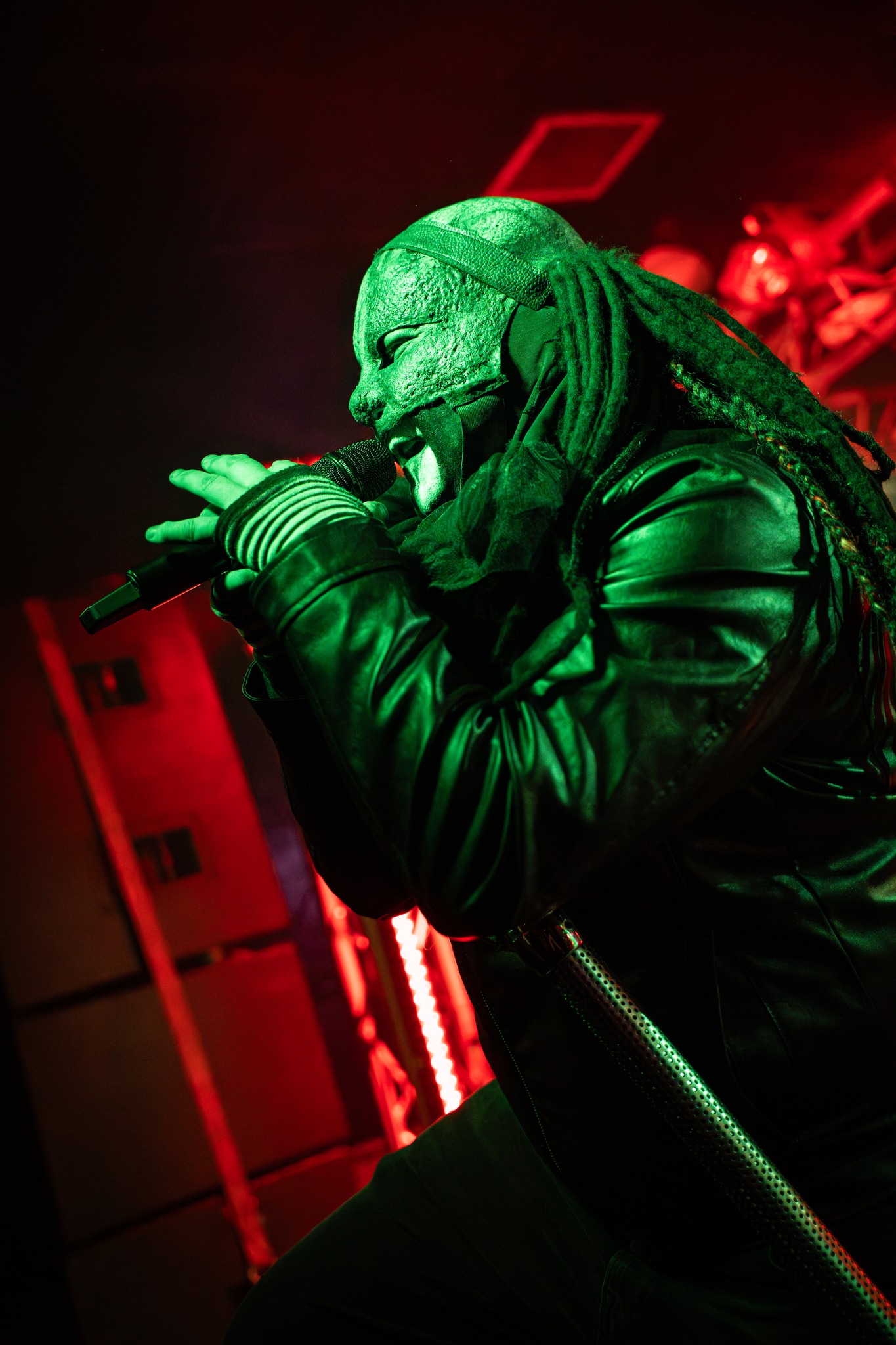
ASHE
VOCALS
Uses: Rebel Mic Stands, Sennheiser mics, Sure IEMs.
MORAX
DRUMS
Uses: Korg, Mapex, Paiste, Black Panther Snare Drums, Axis Percussion,
Rhythm Tech, Vater, Quik Stix, Protection Racket, Sure IEMs.
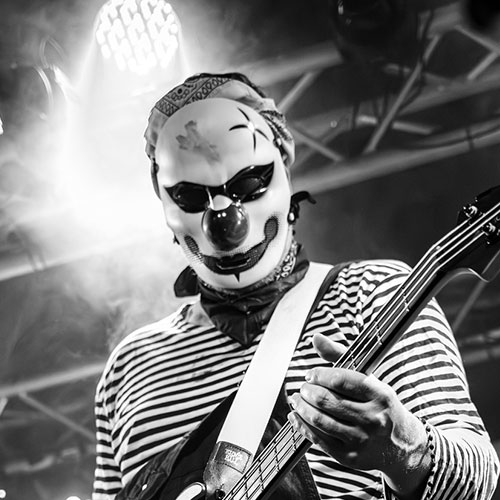
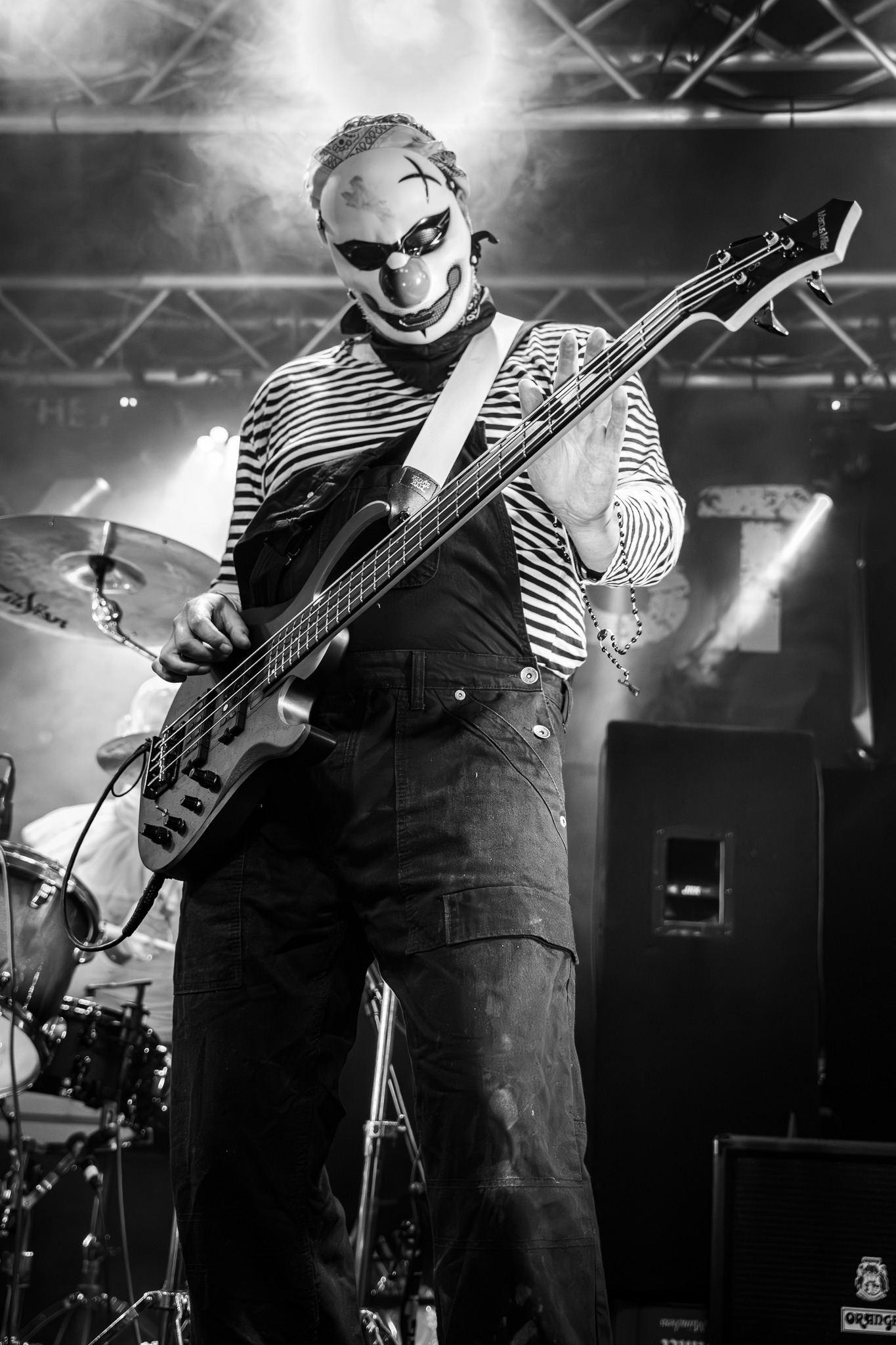
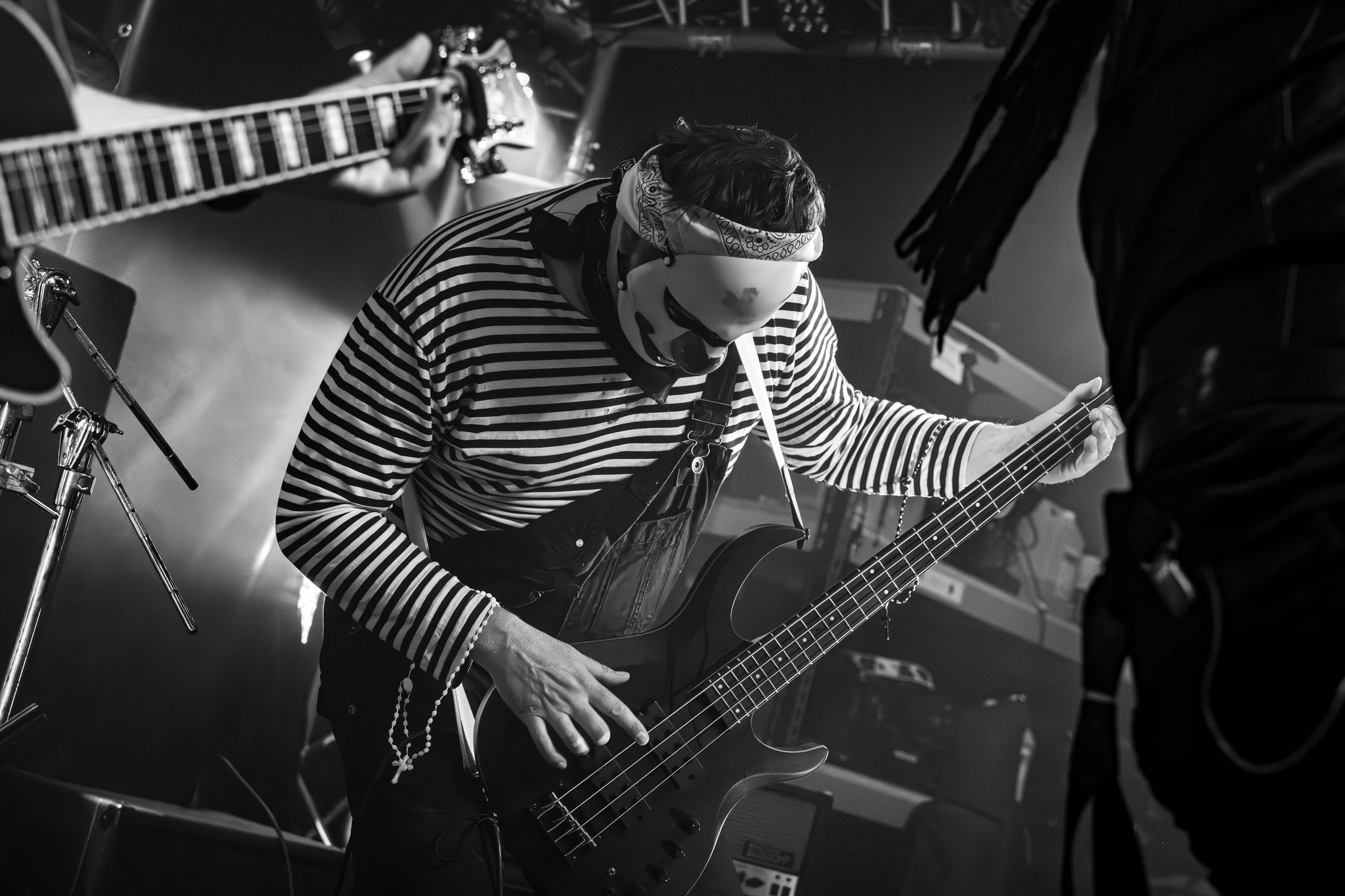
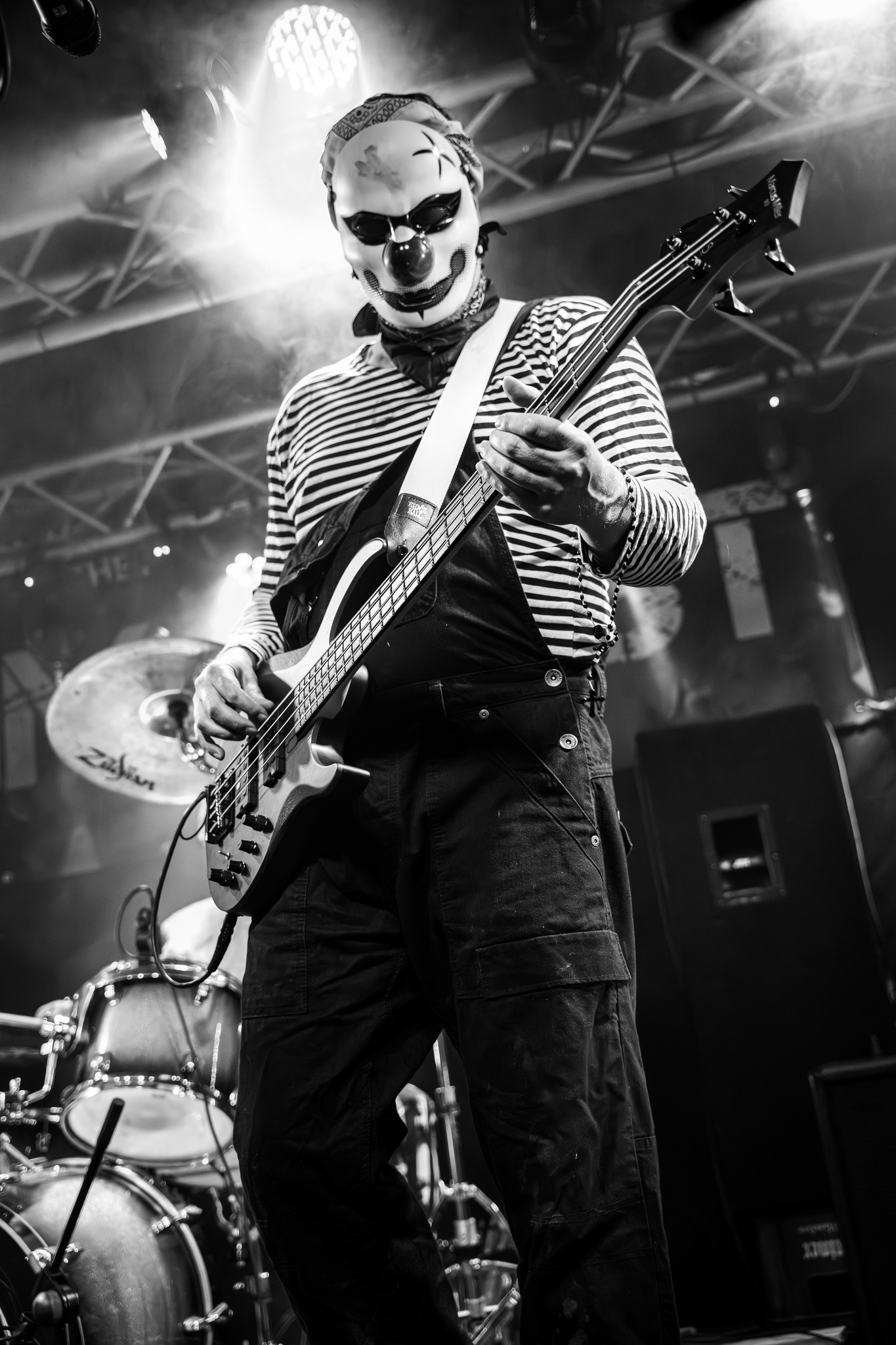
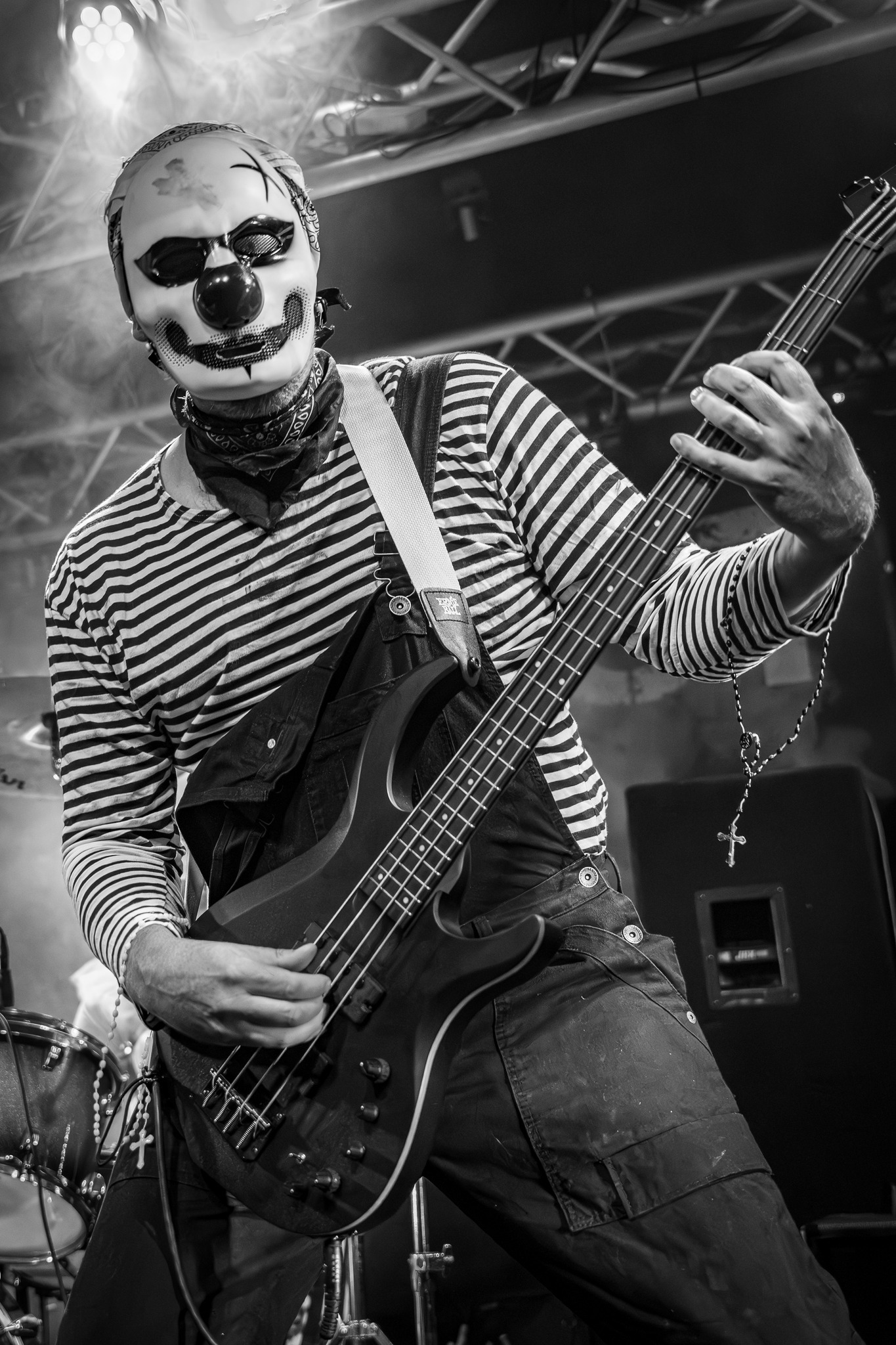
AUGUSTE
BASS
Uses: Hartke Amplification, Sire Marcus Miller M2 Bass. D’addario strings. Planet Waves cables, Line6 G90 wireless.

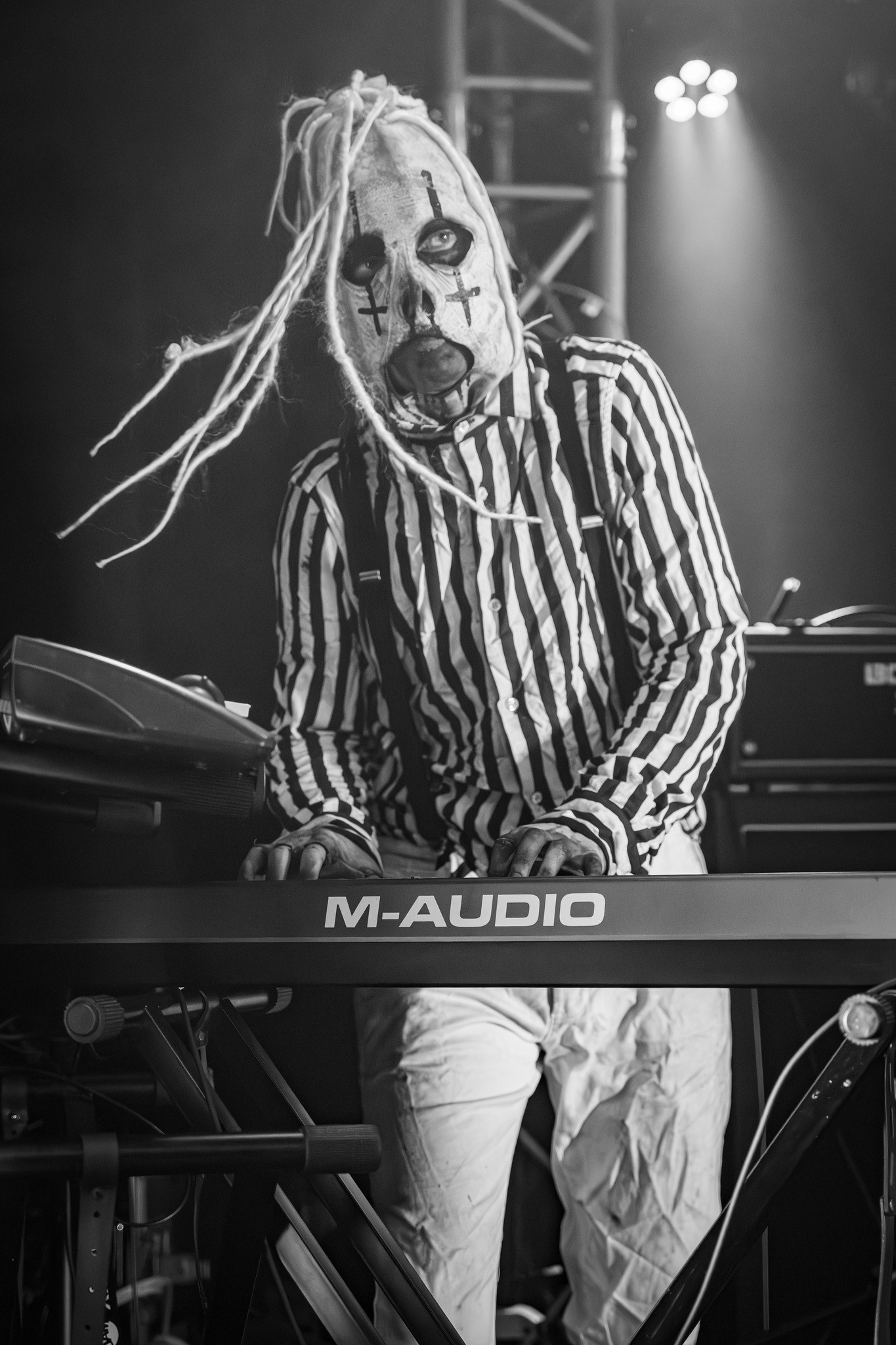
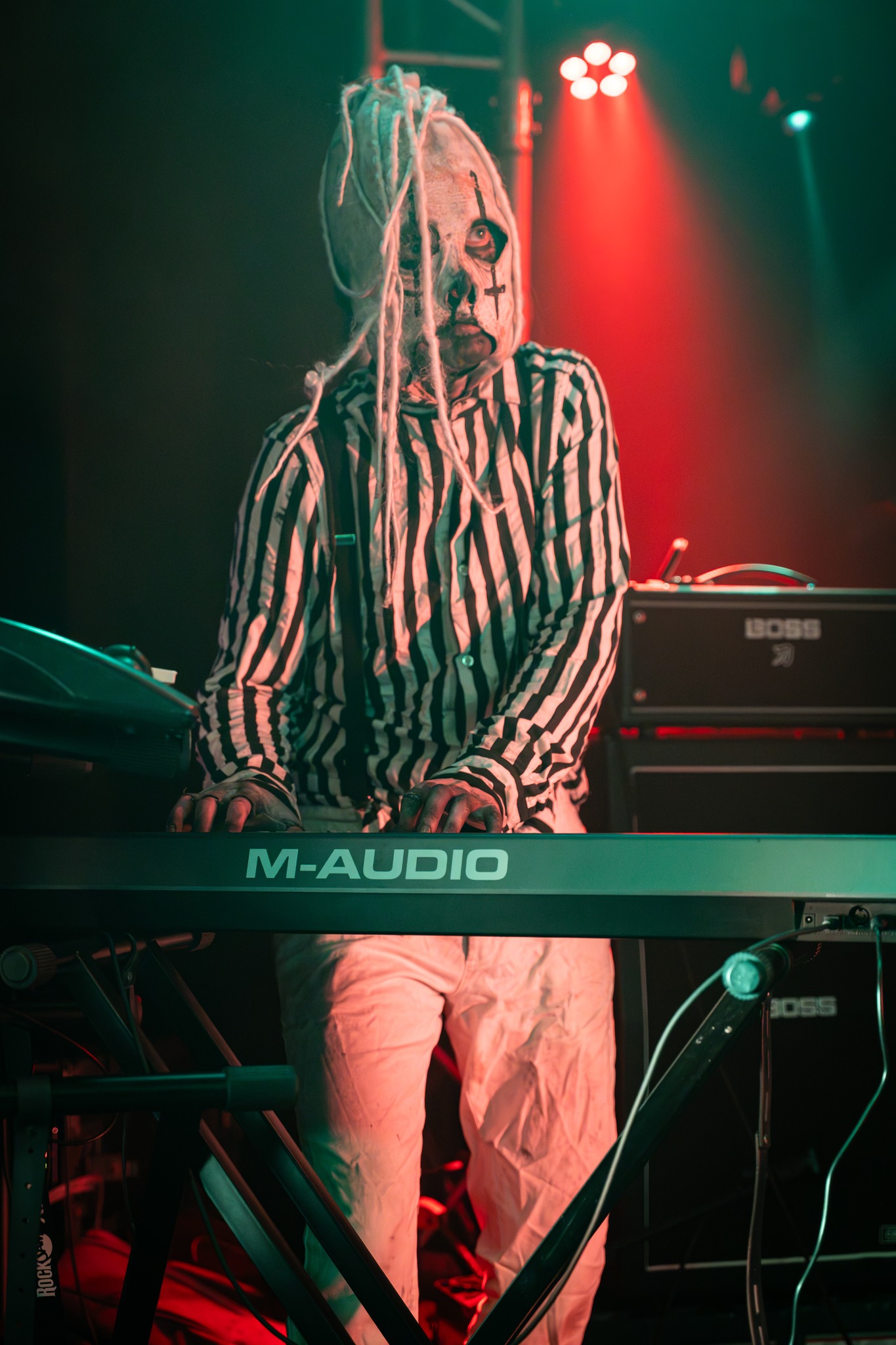
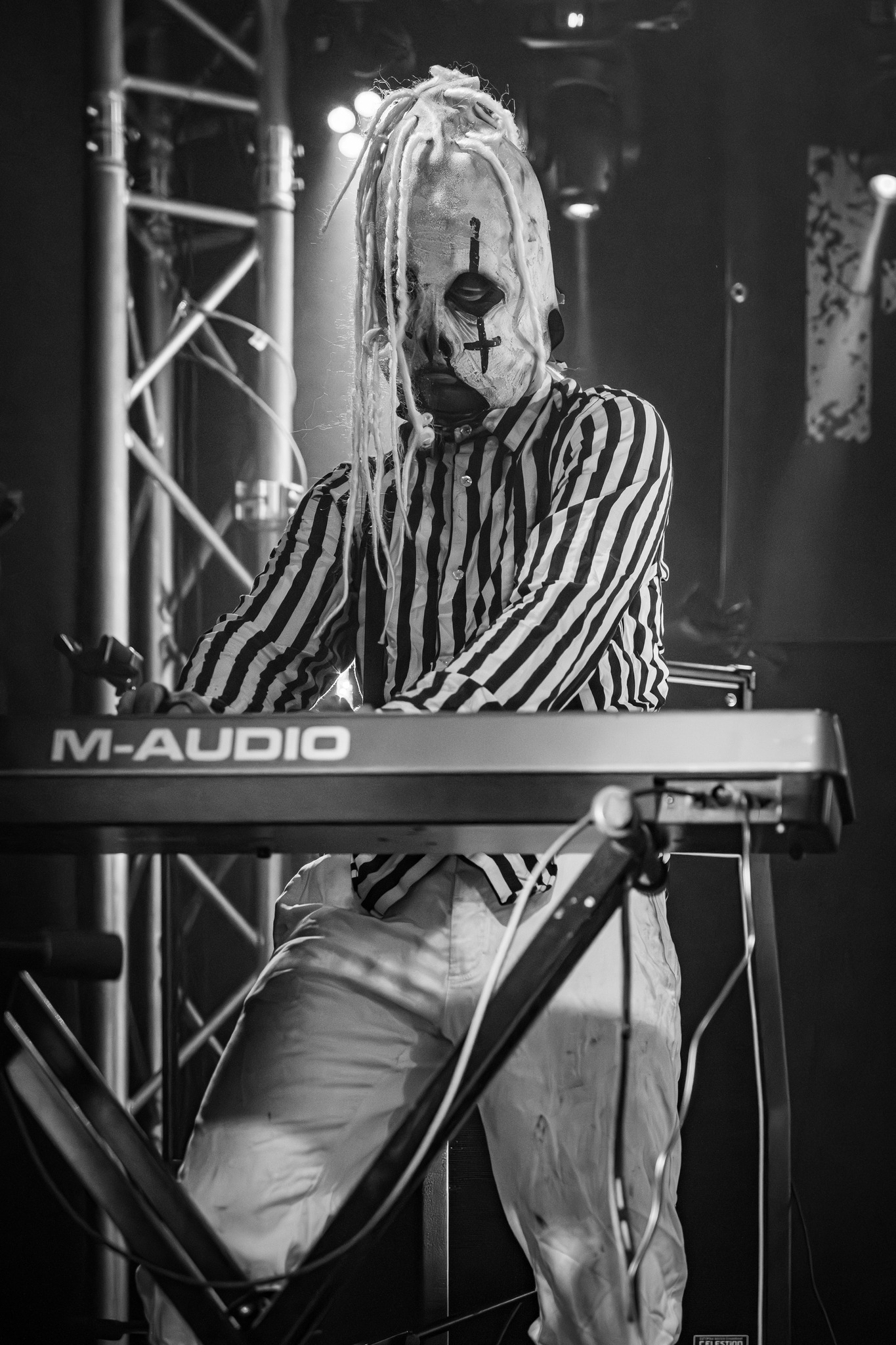
YORICK
KEYS / SAMPLES
Uses: Ableton Live, M-Audio Keystation.
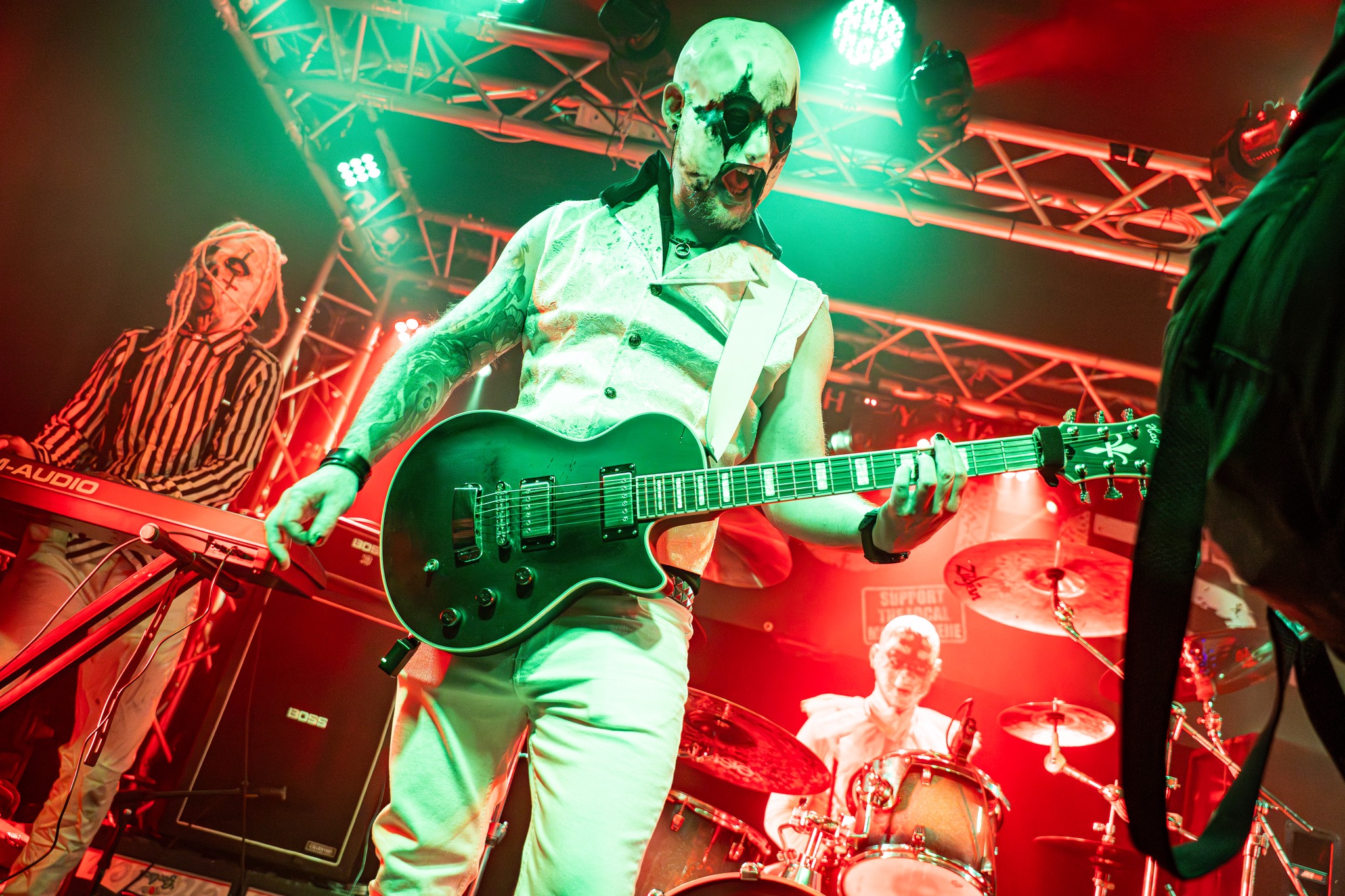
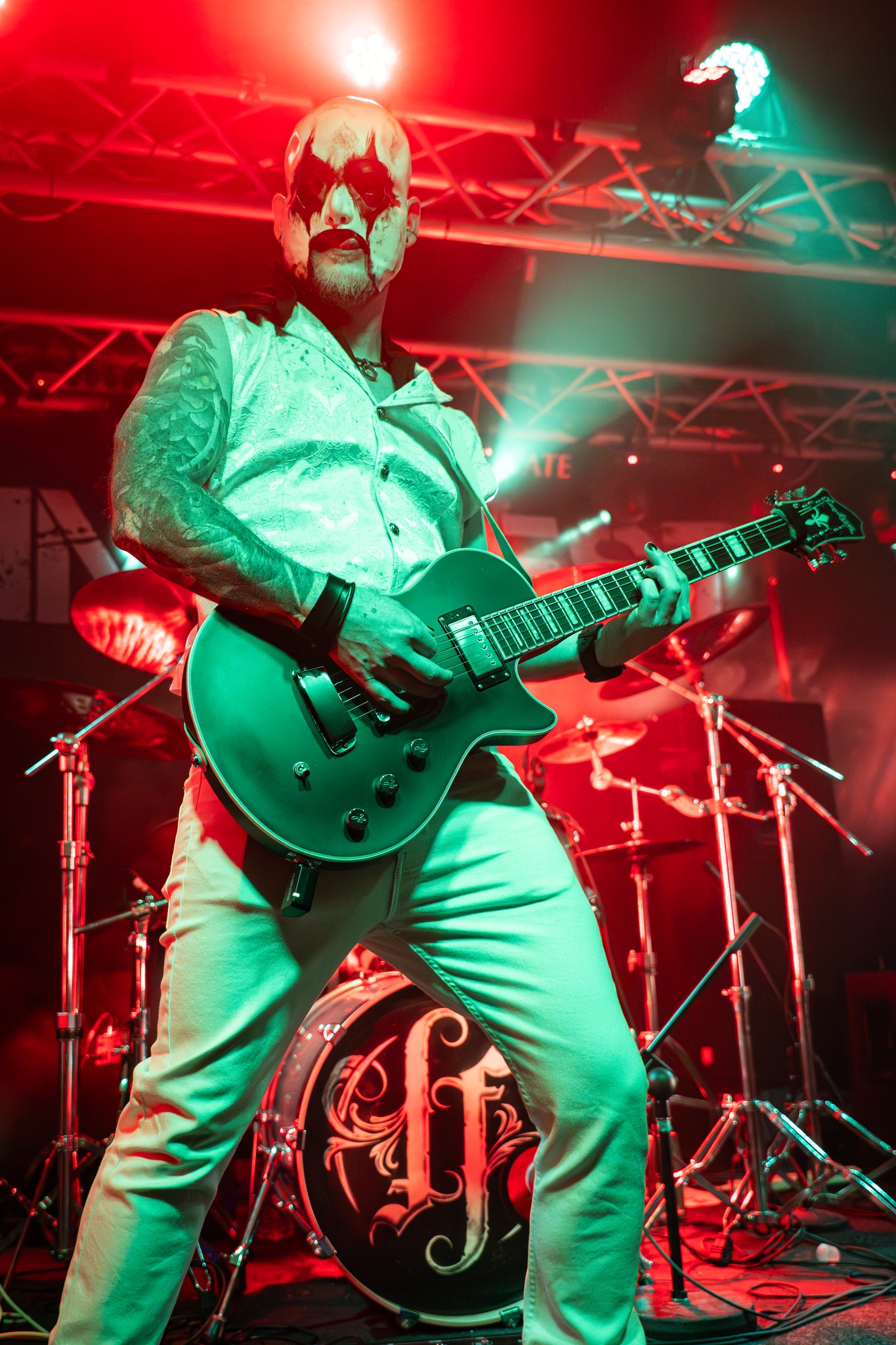
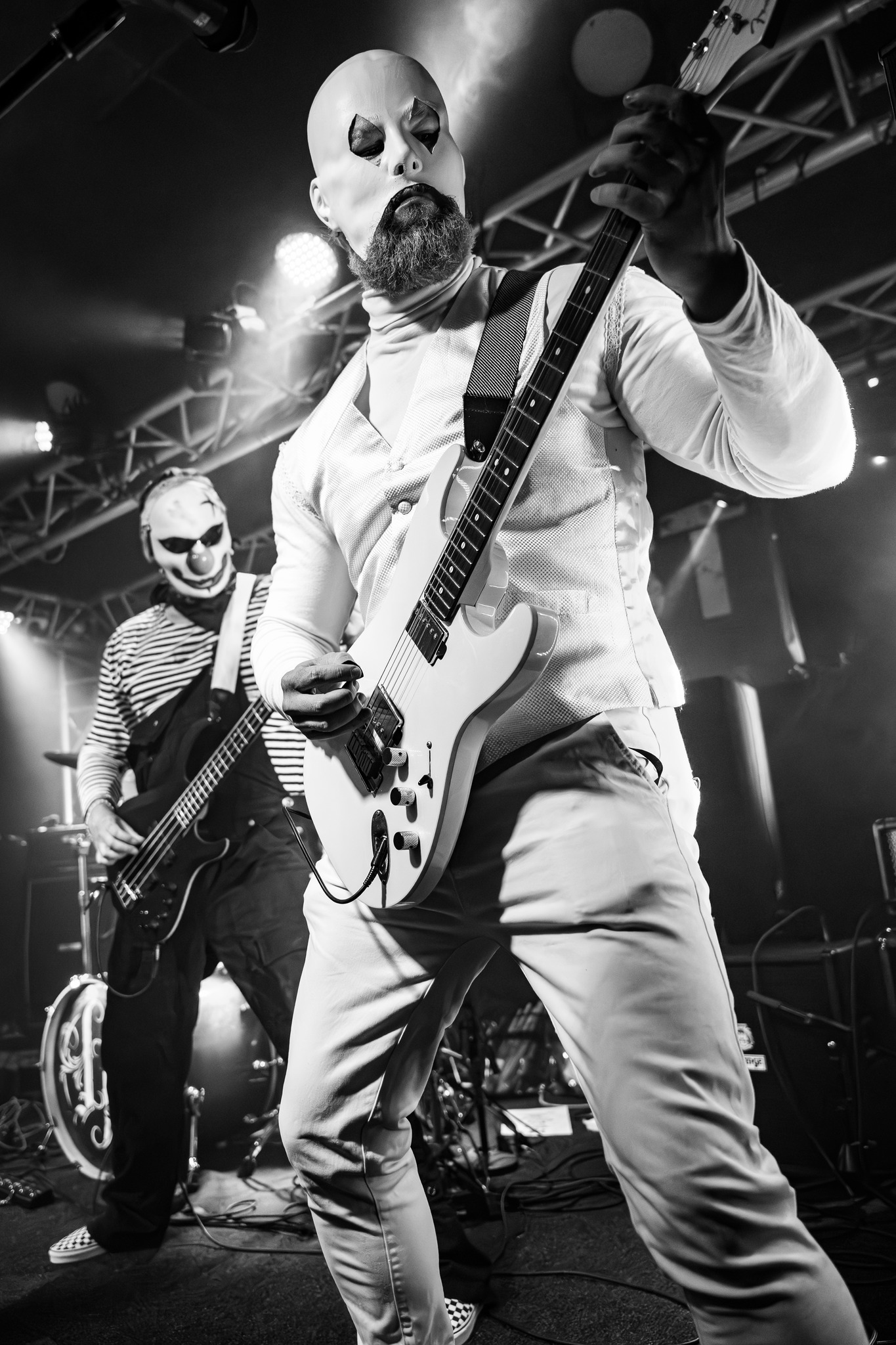
SKINFACE
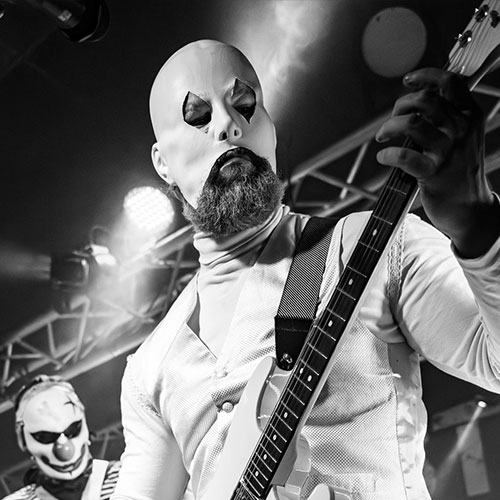
GUITARS
Uses: Fender guitars, Peavey amplification, Marshall cabinets, Celestion speakers, MXR and Ibanez pedals, Ernie Ball strings.
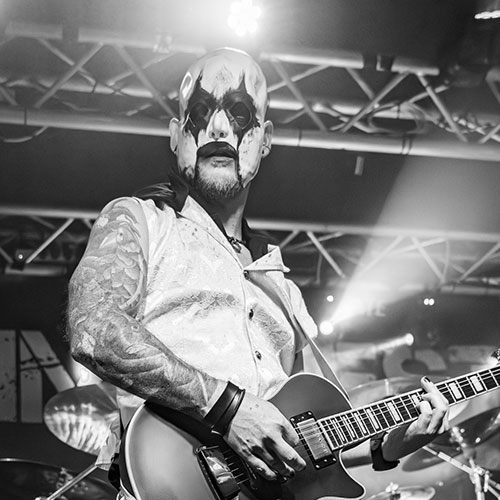
GRYM
GUITARS
Uses: Hagstrom guitars, BOSS amplification, Celestion speakers, BOSS, Digitech and Ibanez pedals, Ernie Ball strings, BOSS Wireless Systems.
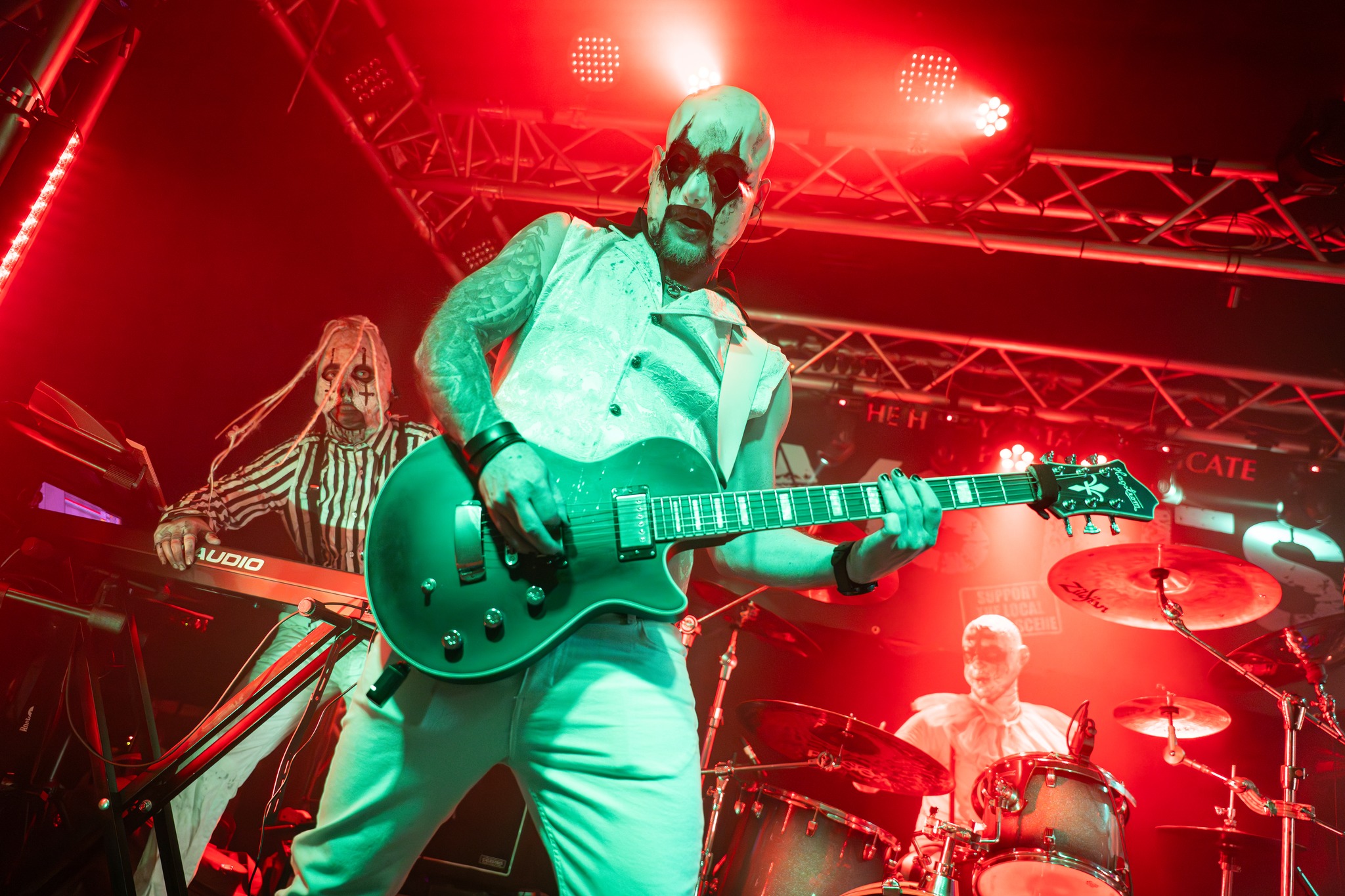
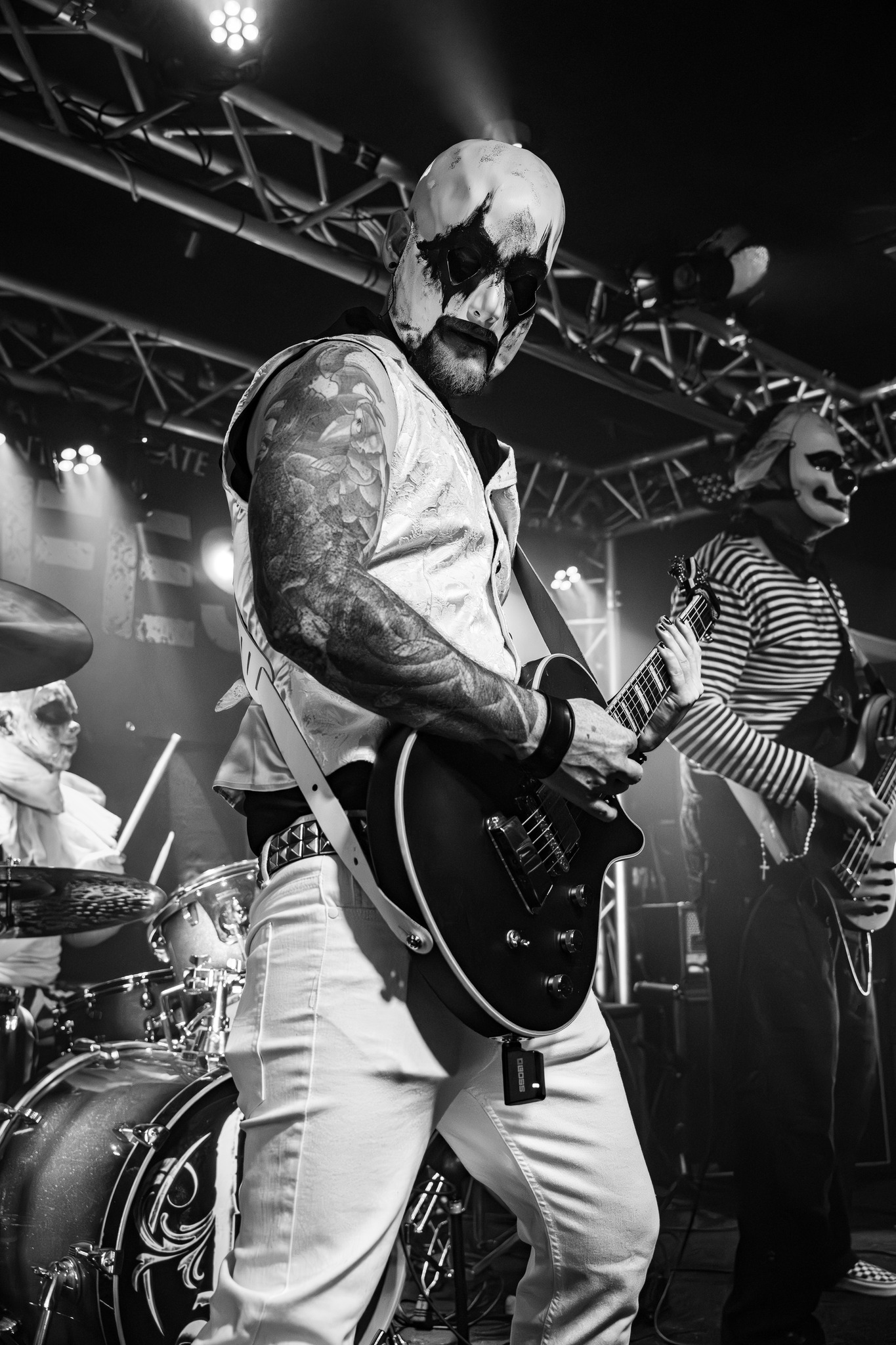
GRYM
Grym had once been a man of laughter, painted in bright colours beneath the big top. But even in life, the greasepaint could not conceal the cracks in his spirit. Night after night, he entertained children and drunks alike, yet behind the mask was only silence and despair. The circus moved on, but Grym remained, starved of purpose, drowned by loneliness. His end was not glorious; he died nameless in the shadows of a rotting carnival tent, a broken guitar beside him.
It was Skinface who found him. Skinface, with his pale stitched visage and eyes that gleamed like razors, whispered promises of resurrection. Through rituals woven from blood and ash, he dragged Grym back across the veil. What rose was no longer the man who once played for joy, it was a husk animated by rage and sorrow, bound in eternal servitude to the music of the damned.
Now Grym plays guitar at Skinface’s side in their dark ensemble, each note dripping with anguish, each chord a reminder of his stolen rest. The crowd doesn’t cheer, they scream, enthralled by the dirges of decay. Grym does not smile anymore; his painted grin is carved from grief, echoing through every distorted riff.
SKINFACE
Coming soon
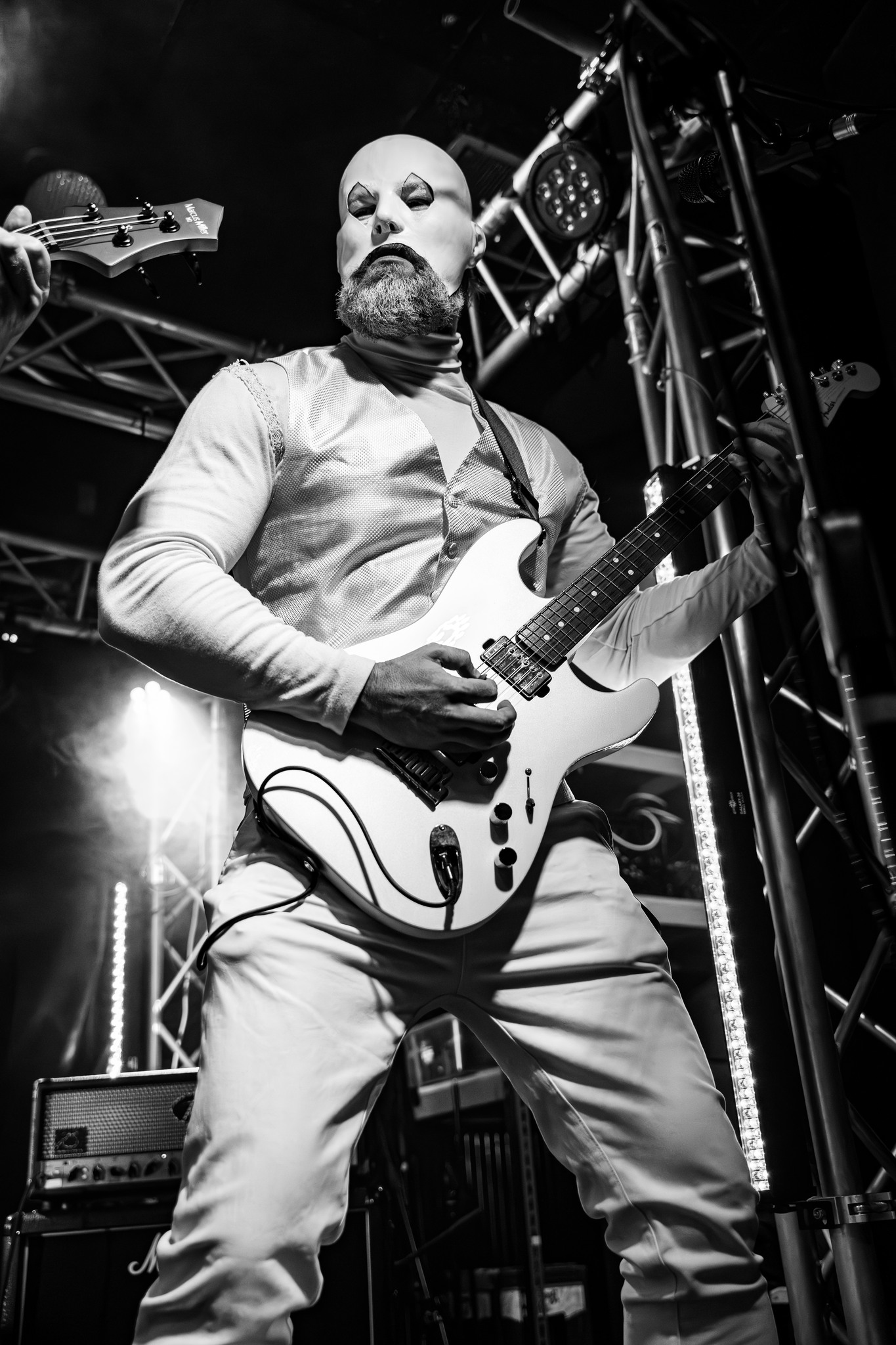
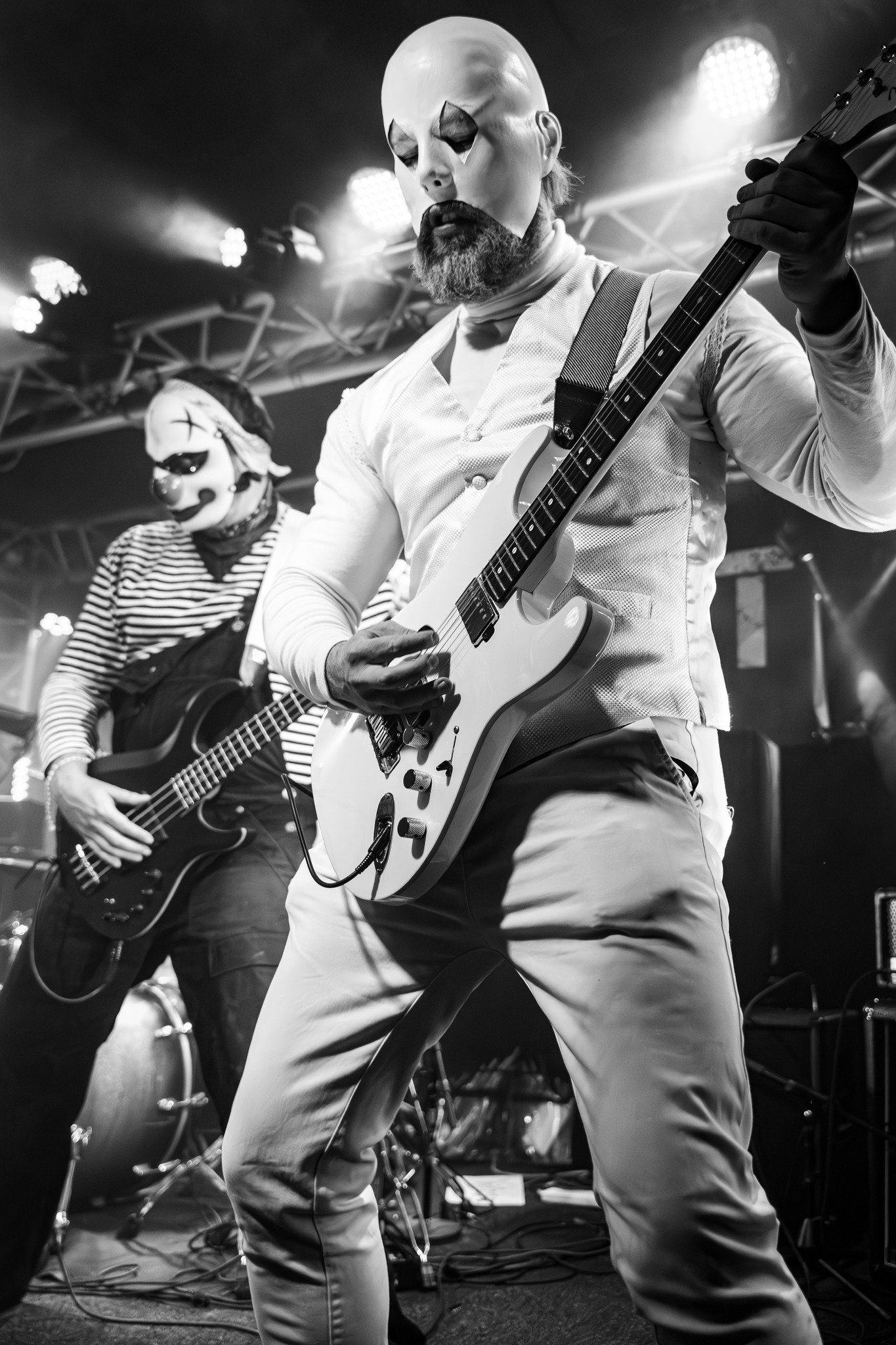
YORICK
A fellow of infinite jest.

AUGUSTE
‘Auguste’ is a traditional ‘red’ clown born into a circus family stretching back 2 centuries…. or at least he was until forced on the run as a minor. He was born to circus royalty but the liaison between the acrobat and the master was a forbidden one. He quickly very grew too big and clumsy for either family trade atop the poles or running the show, the only role open was as the ‘butt of every joke’ red clown but, as with anyone forced into a troupe they don’t fit, started to be resented by his fellow clowns, particular Mr White, the leader. He was beaten and bullied to try to make him fit for over a decade and across the stages of the world the explosions got bigger and the beatings after got harder until he permanently wore a mask to cover his damaged face. Forced eventually to run and in constant pain from the years of beating he vanished one night near Zoo station in Berlin and disappeared into the East before the wall came down.
Unheard of for years until picked up in Moscow by Ashe he joined our travelling troupe, he appears now filthy and broken and, though no church will have him, with oxthodox religion to help him understand his salvation in ‘The Injester’
MORAX
Coming soon
ASHE
Coming soon